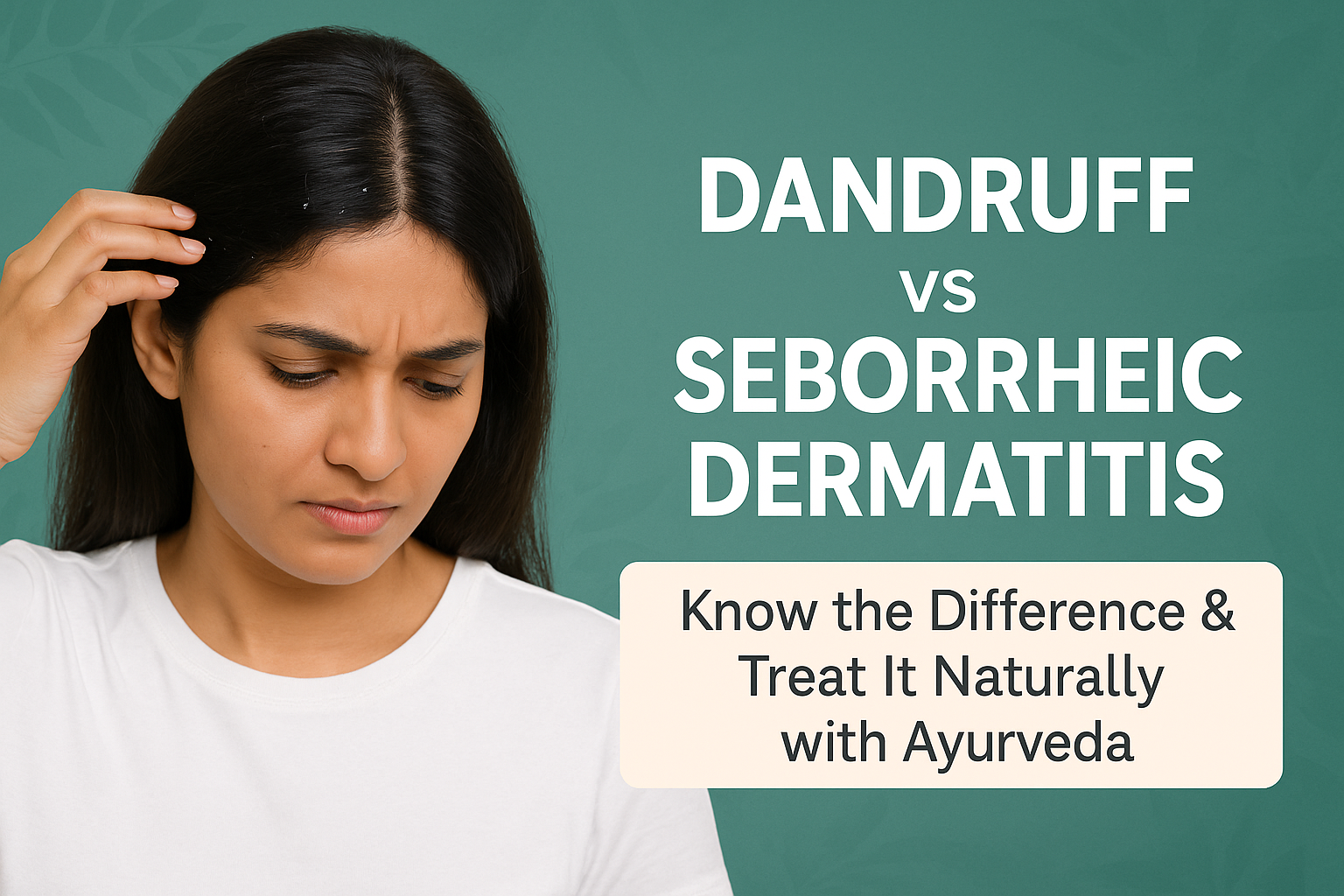
Many people think dandruff and seborrheic dermatitis are the same because both cause flakes on the scalp.
But in reality, they are two different conditions — and both require different treatment approaches.
If you use the same shampoo or home remedies for both, the problem may not go away — and sometimes even gets worse.
So let’s understand the difference in a simple and clear way.
1. What is Dandruff?
Dandruff is a mild scalp condition.
It usually happens when your scalp becomes:
· Dry
· Rough
· Under-nourished
Common Signs of Dandruff
· Small white flakes
· Mild itching
· Dryness on scalp
· No redness or swelling
Why Dandruff Happens?
· Change in weather (especially winter)
· Using chemical shampoos
· Stress & irregular lifestyle
· Washing hair too often or too less
· Not oiling the scalp properly
👉 Dandruff is mostly due to dryness.
2. What is Seborrheic Dermatitis?
Seborrheic Dermatitis is a stronger and more serious scalp condition.
Here, the scalp produces too much oil (sebum) and a fungus called Malassezia grows excessively.
Common Signs of Seborrheic Dermatitis
· Yellowish or oily flakes
· Sticky / greasy scalp
· Redness, inflammation, & irritation
· Hair starts thinning or falling
· Sometimes affects eyebrows, beard & behind ears too
👉 This is not a simple dryness issue.
It is linked to oil imbalance + skin inflammation.
Easy Difference Chart
Feature | Dandruff | Seborrheic Dermatitis |
Flakes | White & dry | Yellowish & greasy |
Scalp | Dry | Oily & inflamed |
Itching | Mild | Moderate to severe |
Redness | No | Yes |
Hair Loss | Rare | Common if untreated |
Severity | Mild & temporary | Chronic & recurring |
Ayurvedic Perspective
In Ayurveda, both problems are linked to imbalance of Doshas:
· Vata → Dry scalp & flaking
· Kapha → Excess oil & stickiness
· Pitta → Heat, redness & irritation
So, true healing comes when we balance these doshas, not just wash the flakes away.
That’s why anti-dandruff shampoos give relief only for a few days.
But Ayurveda treats the root cause internally + externally.
🌿VHCA’s Ayurvedic Treatment Approach
At World’s 1st Ayurveda Hair & Skin Clinic VHCA, we follow a step-by-step healing plan:
✅ Step 1: Trichoscopy Scalp Analysis
This tells:
· Scalp oil level
· Hair follicle health
· Any inflammation or infection
✅ Step 2: Customized Herbal Medicines
To balance doshas and reduce internal toxin load.
✅ Step 3: Ayurvedic Scalp Serums / Oils
Non-sticky, fast-absorbing herbal oils for:
· Nourishing hair roots
· Healing scalp layers
· Reducing fungal growth
✅ Step 4: Topical Herbal Creams / Gels
To relieve:
· Itching
· Redness
· Scaling
✅ Step 5: Healthy Diet & Routine Guidance
Because your food affects your scalp.
VHCA Recommended Treatment Kits
Condition | VHCA Kit |
Seborrheic Dermatitis (Oily Dandruff) | Alocure Capsules + Tricho Nasal Drops + SeboCare Cream + pH Balance Shampoo |
These are:
· 100% Ayurvedic
· Non-steroidal
· Clinically tested
· Safe for long-term use
Simple Home Remedies
You can also try these at home:
✔ Massage scalp with Warm Coconut Oil + Neem leaves
✔ Wash hair with Fenugreek (Methi) Water
✔ Apply Fresh Aloe Vera Gel twice a week
✔ Avoid fried, spicy & very sugary foods
✔ Practice deep breathing (Pranayama) to reduce stress
When to Visit VHCA?
· If flakes keep coming back
· If scalp is red, oily or painful
· If you notice hair thinning
Early treatment prevents hair loss and scalp damage.
Conclusion
Dandruff and seborrheic dermatitis look similar but are not the same.
That is why using the same shampoo or home remedy for both does not work.
Ayurveda treats the root cause by:
· Balancing scalp oils
· Reducing inflammation
· Nourishing hair follicles
→ leading to long-lasting & natural recovery.
At VHCA, thousands of patients have regained healthy scalp & stronger hair through personalized Ayurvedic treatment.